
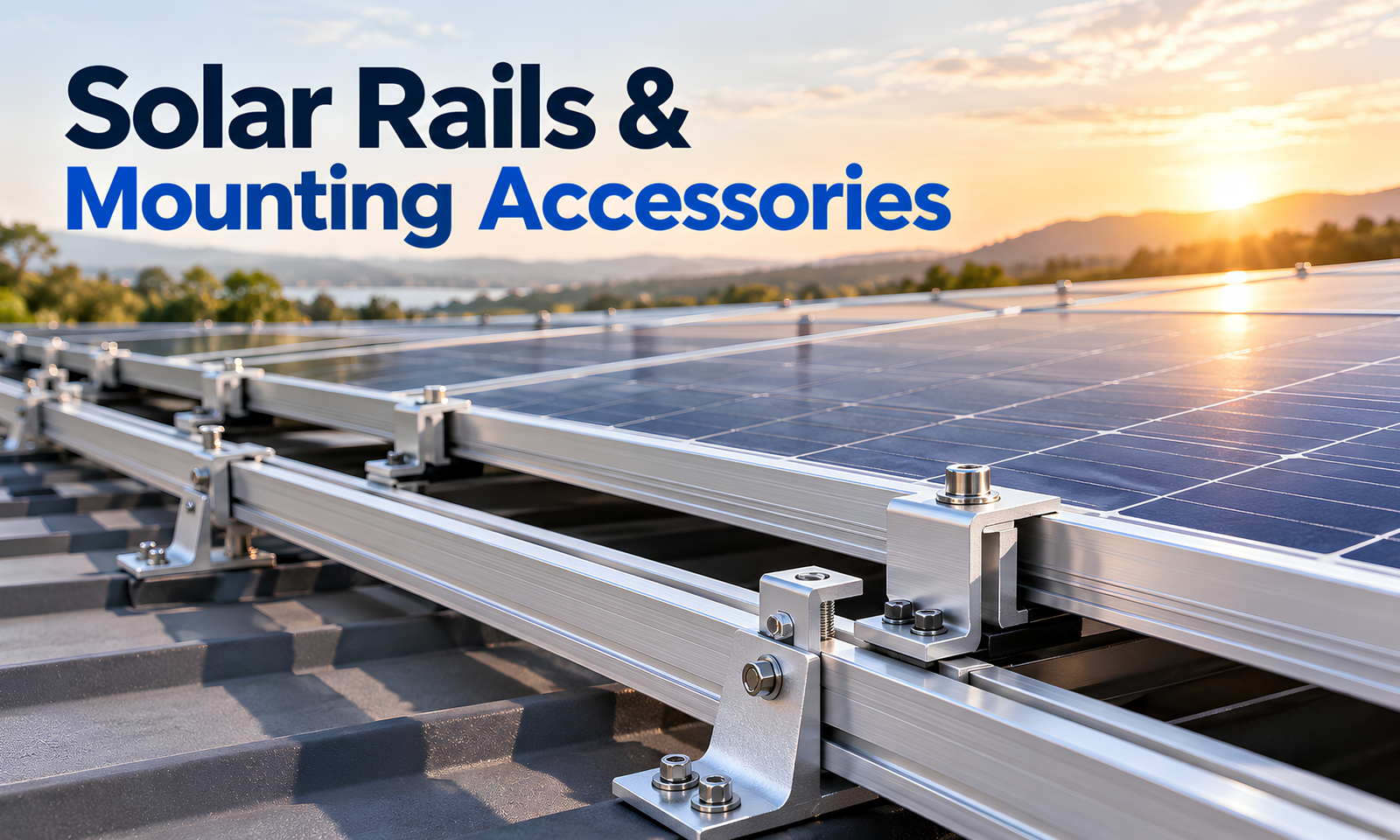
Rooftop solar systems do more than generate clean electricity. They also need a strong and reliable structure to stay secure for years.
That is where solar mounting accessories come in.
A well-designed mounting system keeps panels firmly in place. It also helps maintain the correct panel angle and reduces the risk of movement caused by wind, rain, and other outdoor conditions.
Among these components, solar panel mounting rails play an important role. They create a stable base that connects solar panels to the roof structure.
However, rails are not the only part of the system. Clamps, brackets, fasteners, hooks, and other accessories work together to create a complete mounting solution.
So, what do these components do? And how can you choose the right ones for your rooftop project?
Let’s explore.
-
What Are Solar Mounting Rails?
In simple terms, the rail acts as the connecting framework between the roof and the solar panel.
Most rails use light weight, yet durable materials such as aluminium. This helps reduce structural load while providing good resistance to outdoor conditions.
Furthermore, the right rail design can make installation faster and more organised.
-
Why Are Mounting Rails Important?
Solar panels remain outdoors for many years. Therefore, their supporting structure needs to handle changing weather conditions.
Strong solar panel mounting rails help keep panels properly aligned and securely fixed.
They also provide several practical benefits:
-
- Support the weight of solar panels
-
- Maintain panel alignment
-
- Improve installation stability
-
- Simplify panel installation
-
- Allow suitable spacing between panels
-
- Help manage cable routing
-
- Support long-term system durability
A weak or poorly designed mounting structure can create installation problems. It may also affect panel positioning.
Therefore, installers should treat the mounting system as an important part of the complete solar project.
-
Main Components of a Rooftop Solar Mounting System
A rooftop mounting system includes several components for each specific job.
Solar Rails
Rails provide the main horizontal support for the panels. They connect with the roof mounting points and create the framework for panel installation.
Mid Clamps
Mid clamps fix adjacent panels to the rail. They sit between two panels and help maintain consistent spacing.
End Clamps
End clamps securely fix the outer edges of the solar panel array. They provide a secure connection between the panel frame and the mounting rail.
Roof Hooks
Roof hooks are commonly used with tiled or pitched roofs. They are used to connect the mounting structure to the needed points on the roof.
L-Brackets
L-brackets connect rails to roof structures or other mounting points. Installers can select different designs based on the roof type and installation method.
Fasteners
Bolts, nuts, screws, and other fasteners hold the mounting components together. The correct size and material matter because these parts remain exposed to outdoor conditions.
Splice Connectors
Long solar arrays may require multiple rail sections. Splice connectors join these sections and help create a continuous mounting framework.
Grounding Components
Grounding clips, washers, and other electrical bonding components can help create the required grounding path for the mounting system.
-
Types of Solar Rails
Solar rails come in different designs and sizes. The right option depends on the panel layout, roof structure, mounting method, and project requirements.
Aluminium Rails
Aluminium rails are widely used in rooftop installations. They are easy to handle.
Heavy-Duty Rails
Some projects require stronger structural support. Heavy-duty rails can suit larger systems or applications where the mounting design requires additional load capacity.
Rail Systems for Different Roof Types
Roof design also influences rail selection.
For example, a metal roof may use a different mounting approach from a tiled roof. Similarly, flat roofs often use mounting structures designed around specific tilt and ballast requirements.
Therefore, installers should select the rail system after assessing the roof.
-
Common Solar Mounting Accessories
Rails alone cannot complete a solar installation. Several accessories work together to create a secure system.
Here are some commonly used components:
|
Component |
Main Function |
|
Rails |
Provide structural support for panels |
|
Mid Clamps |
Secure panels between two modules |
|
End Clamps |
Secure panels at the array edges |
|
Roof Hooks |
Connect mounting systems to tiled roofs |
|
L-Brackets |
Connect rails to mounting points |
|
Fasteners |
Secure different components together |
|
Splice Connectors |
Join multiple rail sections |
|
Grounding Clips |
Support electrical bonding |
|
Cable Clips |
Keep solar cables organised |
|
Mounting Feet |
Provide support on suitable roof surfaces |
Together, these accessories help installers create a cleaner and more stable solar array.
-
Solar Rails Support Panel Installation
A typical rooftop installation follows a planned sequence.
First, the installer checks the roof and identifies suitable mounting points.
Next, the installer fixes the required brackets, hooks, or mounting feet.
After that, the rails are positioned and secured.
The installer then places the solar panels on the rails. Mid clamps secure panels next to each other, while end clamps secure the outer panels.
Finally, the installer checks alignment, fastener tightness, grounding, and cable management.
This structured process makes the installation more efficient.
Moreover, properly installed solar panel mounting rails help maintain a consistent panel layout across the rooftop.
-
Factors to Consider Before Choosing Mounting Components
Choosing mounting accessories requires more than checking the price.
- Roof Type
Start with the roof.
Is it tiled, metal, concrete, or another surface? The answer determines which brackets and mounting methods may work.
- Panel Dimensions
Solar panels come in different sizes and frame designs. Check the panel dimensions before selecting clamps and rail arrangements.
- Wind Conditions
The mounting system should account for local environmental conditions. Areas exposed to stronger winds may require a suitable structural design.
- Material Quality
Choose components made from materials suitable for long-term outdoor use.
Aluminium and corrosion-resistant hardware are common choices for many rooftop applications.
- Load Requirements
The roof must safely support the complete solar installation. Consider the weight of panels, rails, accessories, and any other structural components.
- Installation Method
Different roofs require different mounting approaches. A system designed for one roof type may not suit another.
- Compatibility
Check that rails, clamps, brackets, fasteners, and panels work together.
A compatible system can make installation smoother and reduce unnecessary adjustments.
-
Common Mistakes to Avoid
Even a good mounting product can perform poorly when installers use it incorrectly.
Here are some common mistakes:
Choosing Components Without Checking the Roof
Every roof has different structural characteristics. Always assess the roof before selecting the mounting solution.
Using Incompatible Clamps
Clamp dimensions should match the solar panel frame. Incorrect clamps can create poor panel fixation.
Ignoring Cable Management
Loose cables can create an untidy installation. They may also rub against sharp edges or remain exposed to unnecessary stress.
Use suitable cable clips and routing methods.
Overlooking Fastener Quality
Small components still matter. Poor-quality fasteners can affect the reliability of the entire mounting system.
Skipping Final Checks
After installation, inspect the complete structure. Check alignment, connections, grounding, and fastener tightness.
A few extra minutes can help prevent avoidable issues later.
-
Benefits of a Proper Solar Mounting System
A well-designed mounting system supports more than panel installation.
It can provide:
Better stability: Properly fixed panels can remain securely positioned.
Cleaner installation: Organised rails and accessories create a neat array.
Faster installation: Compatible components can reduce installation time.
Better alignment: A consistent mounting framework helps installers position panels accurately.
Long-term support: Durable materials can help the mounting structure withstand outdoor exposure.
In addition, a good mounting design makes future inspection and maintenance easier.
-
Solar Rails for Different Rooftop Types
Not every rooftop uses the same mounting approach.
Sloped Roofs
Sloped roofs often use hooks, brackets, and rails designed to follow the roof profile.
Installers must maintain appropriate panel positioning while protecting the roof surface.
Metal Roofs
Metal roofs can use specialised clamps or brackets depending on the roof profile.
The mounting solution should suit the roofing material and structural design.
Flat Roofs
Flat roofs often use structures that create a suitable panel tilt. The design may use mechanical fixing, ballast, or another approved method based on the project.
Commercial Rooftops
Large commercial rooftops may require longer rail runs and carefully planned panel layouts.
For such projects, solar panel mounting rails can help create a systematic and scalable installation framework.
-
Maintenance Tips
Solar mounting systems generally need limited maintenance. However, regular checks remain useful.
Inspect the mounting structure during routine solar system maintenance.
Look for:
-
- Loose fasteners
-
- Corrosion
-
- Damaged clamps
-
- Rail movement
-
- Cable issues
-
- Roof damage
-
- Panel misalignment
Also, check the mounting system after severe weather events.
If you notice structural movement or damaged components, arrange a professional inspection.
A proactive approach can help identify small problems before they become larger ones.
-
Conclusion
A rooftop solar system needs a reliable foundation.
Solar panels may receive most of the attention, but the mounting structure plays an equally practical role. Rails, clamps, brackets, fasteners, hooks, and grounding accessories all work together to support the installation.
The right solar panel mounting rails can simplify installation while helping maintain panel stability and alignment.
However, product selection should always consider the roof type, panel design, environmental conditions, structural requirements, and component compatibility.
In short, choose the mounting system as carefully as you choose the solar panels.
A strong structure supports a better solar installation from the ground up.
-
FAQs
1. What are solar mounting rails used for?
Solar mounting rails provide structural support for solar panels. Installers attach them to suitable roof mounting points and then secure the panels to the rails.
- What material are solar mounting rails usually made from?
Many mounting rails use aluminium because it is lightweight and suitable for outdoor applications. The exact material depends on the product and project requirements.
- Do all solar panels use the same mounting accessories?
No. Panel dimensions, frame design, roof type, and mounting method can affect accessory selection. Always check compatibility before installation.
- Can solar rails be used on different roof types?
Yes, but the complete mounting solution may differ. Tiled, metal, concrete, and flat roofs can require different brackets, hooks, fasteners, or support structures.
- How long do solar mounting systems last?
The service life depends on material quality, installation quality, environmental exposure, maintenance, and the specific product. Using suitable corrosion-resistant components can support long-term performance.
- Are solar mounting accessories important for rooftop solar?
Yes. Accessories such as clamps, brackets, fasteners, hooks, connectors, and grounding components help create a secure and properly organised solar installation.
- How do I choose the right mounting system?
Start by assessing the roof type and structure. Then consider the solar panel dimensions, mounting method, local environmental conditions, load requirements, and compatibility between components.
- Do solar mounting systems require maintenance?
They require relatively little maintenance, but periodic inspection is useful. Check for loose connections, corrosion, damaged components, cable issues, and any signs of movement.