
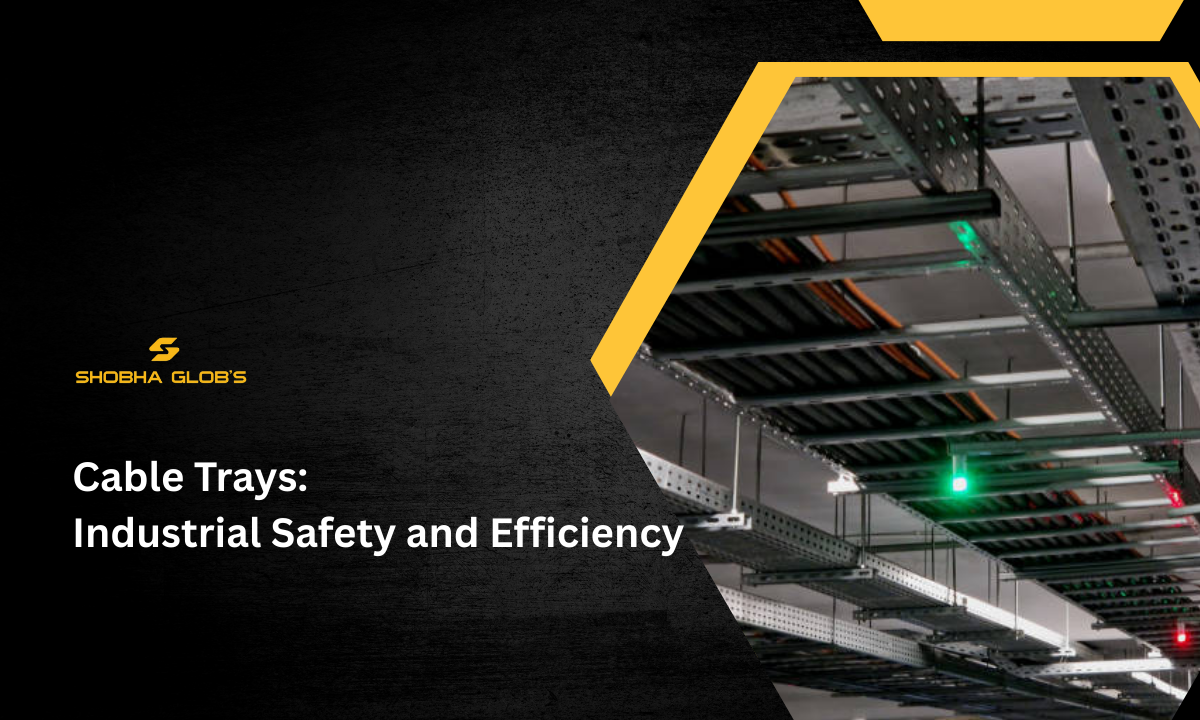
At Shobha Globs, we recognize that proper electrical infrastructure is critical for safe and efficient industrial operations. One often-undervalued yet vital component in this ecosystem is the use of cable trays. These structural systems for routing and supporting electrical cables play a significant role in promoting industrial safety and enhancing industrial efficiency.
In this article, I will discuss how cable trays contribute to these outcomes, explore different cable tray types and sizes, explain the importance of cable tray support and cable tray installation, and give you insight into selecting the right suppliers, including cable tray manufacturers in Bangalore.
Understanding What Cable Trays Are and Why They Matter
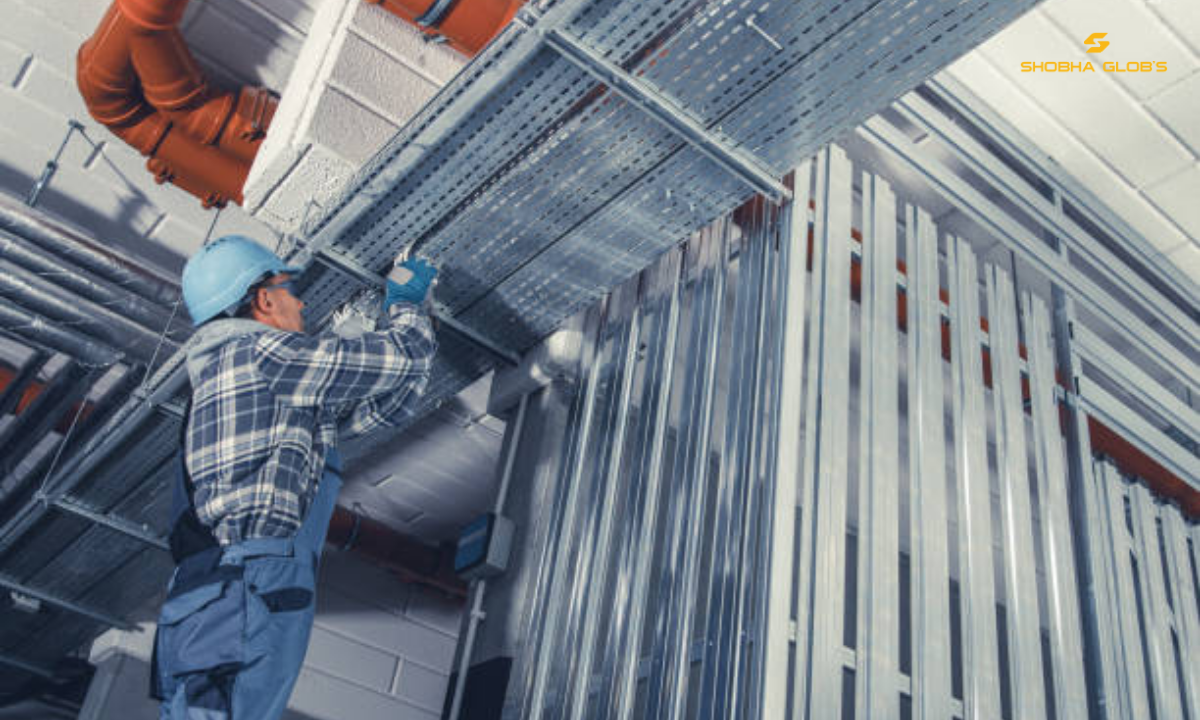
Firstly, what are cable trays? In simple terms, a cable tray is a support system used in electrical installations to carry insulated cables for power distribution, control and communication. They are preferred over individual conduits in many industrial settings because they permit better access, easier modifications, and improved ventilation.
By installing cable trays properly, we minimize risks associated with cable clutter, cable damage, overheating and maintenance difficulties, all of which directly impact industrial safety and efficiency. When cables are simply bundled or run haphazardly, they become difficult to trace, inspect or maintain. Increasing the possibility of faults or fire hazards. A well-designed cable tray system helps avoid those issues.
Cable Trays and Industrial Safety
The role of cable trays in industrial safety cannot be overstated. Here are key safety benefits we emphasize at our operations:
Reduced Fire Risk
Proper cable routing in trays ensures cables are not hidden in inaccessible areas, not crushed or kinked, and have sufficient ventilation. Poor ventilation can lead to cable overheating and fault risk.
Mechanical Protection
In busy industrial plants, cables may be exposed to mechanical damage from moving equipment, materials, or maintenance activities. Using robust cable trays (especially solid-bottom or well-supported ladder trays) ensures cables are protected from external impacts.
Accessibility And Maintenance
In an emergency, the ability to access cables for inspection or replacement is vital. Cable trays facilitate access, reducing downtime and the risk of unsafe work practices (like pulling cables through concealed conduits).
Compliance And Clear Routes
A systematic cable tray network helps meet electrical codes, maintain clear pathways, and separate power, data, and communication lines appropriately, to avoid interference or safety hazards.
Segregation Of Cables
For industrial safety, it’s often necessary to segregate high-power, control, and data cables. Cable trays allow structured separation and routing, which reduces electromagnetic interference and electrical safety risks.
In summary, by guiding the installation and maintenance of cables in a safe, organized manner, cable trays are foundational to industrial electrical safety.
Cable Trays and Industrial Efficiency
Alongside safety, cable trays significantly contribute to operational efficiency in industrial environments:
Easier Modifications And Expansions
Industrial operations evolve, machines get added, and wiring requirements change. With proper cable tray networks, adding cables, rerouting or upgrading is far quicker and less disruptive than in rigid conduit systems.
Improved Cable Performance
Many cable trays, especially ladder or perforated types, provide good ventilation, allowing heat dissipation; this improves cable life and reliability.
Reduced Installation And Maintenance Cost
Once a well-designed tray system is in place, installation of new cables is simpler, maintenance is easier, and fault resolution is faster. This translates to lower labor costs and less downtime.
Better Asset Utilization
Because cable tray systems allow clear tracing of cables and simpler changes, operators spend less time diagnosing issues and more time running productive operations.
Support For Modular Design
Many modern industrial plants, including solar EPC installations, rely on modular, scalable systems. Using cable trays aligns well with modular layouts, enabling future-proofing and smoother commissioning phases.
Therefore, from an efficiency perspective, adopting proper cable tray systems is a strategic investment in asset reliability and responsiveness.
Cable Tray Types and Sizes: What to Know
When specifying a cable tray system, understanding cable tray types and sizes is essential. Here are the key points we use at Shobha Globs:
Types Of Cable Trays
Common forms include ladder trays (best for heavy power cables with ventilation), perforated trays (bottom has holes for better airflow), solid-bottom trays (maximum protection when mechanical damage or EMI shielding is required) and wire-mesh baskets (commonly used for data/communication cables).
Size Of Cable Trays
Tray width, depth and length vary based on cable load, future expansion and spacing. For example, widths may range from around 50 mm to 600 mm or more, depending on the application.
Material And Finish
Depending on the environment (corrosive, humid, or outdoor), materials like galvanized steel, stainless steel, aluminium, or FRP may be chosen. Proper finishing extends durability and safety.
Support Spacing And Installation
The spacing of supports (brackets, hangers) is critical for load-bearing and mechanical safety of the tray. Manufacturers often provide guidelines.
Allowing For Future Growth
When specifying size, we always incorporate at least 20-30% spare capacity to allow for future cables without rerouting major infrastructure.
By carefully selecting the appropriate type and size of cable tray to match load, environment and future needs, we enhance both safety and efficiency.
Cable Tray Support and Installation Considerations
Proper cable tray support and cable tray installation are where the design meets the field. At Shobha Globs, we emphasize:
- Ensuring structural beams/hangers are rated for the tray weight plus cable load and dynamic conditions (vibration, expansion, and seismic if relevant).
- Maintaining correct support spacing to avoid sagging, cable bundle deformation or tray deflection.
- Routing trays with minimal bends, maintaining proper rise/fall for cable drainage (where relevant outdoors), and avoiding contact with other services that may cause abrasion.
- Installing trays with adequate spacing and separation from other services (e.g., pipes carrying steam or chemicals) that may damage cable insulation or cause overheating.
- Using accessories, bends, tees, reducers, and covers properly so that cables are supported at changes of direction and protected from mechanical damage or environmental factors.
- Ensuring installation follows relevant standards and best practices to provide safe access, minimize trip hazards for personnel, and allow clear maintenance pathways.
Good support and installation practices translate into fewer cable faults, easier maintenance and more reliable power/control infrastructure.
Selecting Cable Trays Manufacturers in India
In India, sourcing reliable cable trays is important. Some key considerations when looking for cable trays manufacturers in India include:
- Proven manufacturing quality, adherence to national/international standards (IS, IEC, NEMA).
- Capacity to provide customisation for sizes, materials, finishes, and accessories.
- Local warehouse or manufacturing in Bangalore (if your project is in Karnataka) to reduce lead times and logistics costs.
- Offering a complete ecosystem: trays, accessories, supports, covers and installation guidance, not just the bare tray.
- Experience serving industrial and solar EPC clients, who have stringent requirements for mechanical, environmental and future-proof installation.
- Good after-sales support, documentation, load certification and reliability metrics.
By selecting manufacturing partners who meet these criteria, we ensure our installations at Shobha Globs are robust, scalable and cost-effective.
Final Thoughts
In today’s industrial environment, safe, efficient electrical infrastructure is non-negotiable. Cable trays offer a structured, accessible, durable and flexible solution for routing cables in industrial plants, thereby enhancing industrial safety and driving industrial efficiency.
By choosing appropriate cable tray types and sizes, implementing proper cable tray support and ensuring correct cable tray installation, you build a foundation that supports operations, maintenance and future growth.
When sourcing equipment, engaging reputable cable tray manufacturers in Bangalore ensures good quality and timely delivery. As a technical lead at Shobha Globs, a solar EPC company in India, I urge all our industrial partners to treat the cable tray system not as an afterthought, but as a strategic asset.
Frequently Asked Questions (FAQs)
Q1. What exactly is a cable tray, and how does it differ from conduit?
A1. A cable tray is a structural system that supports insulated electrical cables for power, control and communication. Unlike a conduit (which encloses cables fully), a cable tray allows open routing (or semi-enclosed) with better access, easier modifications, and improved ventilation.
Q2. Why do we need different types of cable trays?
A2. Different installations have varying demands: heavy power cables need good ventilation (ladder trays), delicate data cables need protection from deformation or EMI (solid-bottom trays), and installations in harsh environments may require special material (aluminium or FRP). Selecting the right cable tray type ensures both safety and reliability.
Q3. How do we decide the correct size of a cable tray?
A3. The size of the cable tray is determined by load (number and type of cables), future expansion allowance, cable diameter, support spacing, and environmental constraints. For example, widths may range from ~50 mm for small control cables to 600 mm+ for large industrial bundles. Oversizing by 20-30% for future growth is advisable.
Q4. What sort of installation support should be considered for cable trays?
A4. Proper support includes structural brackets/hangers capable of the load, correct spacing to avoid sag or overload, clearance from other services, proper routing of bends/tees, ensuring trays are mounted for accessibility and maintenance, and protection from mechanical or environmental damage. Good support contributes hugely to system longevity and safety.
Q5. How can I find reliable cable tray manufacturers in Bangalore?
A5. Look for cable tray manufacturers in Bangalore who provide full systems (tray plus accessories), have certifications/standards compliance, provide local service and support, have experience with industrial and solar installations, and offer flexible sizes/materials. Visiting local workshops and verifying previous installations helps assess credibility.