
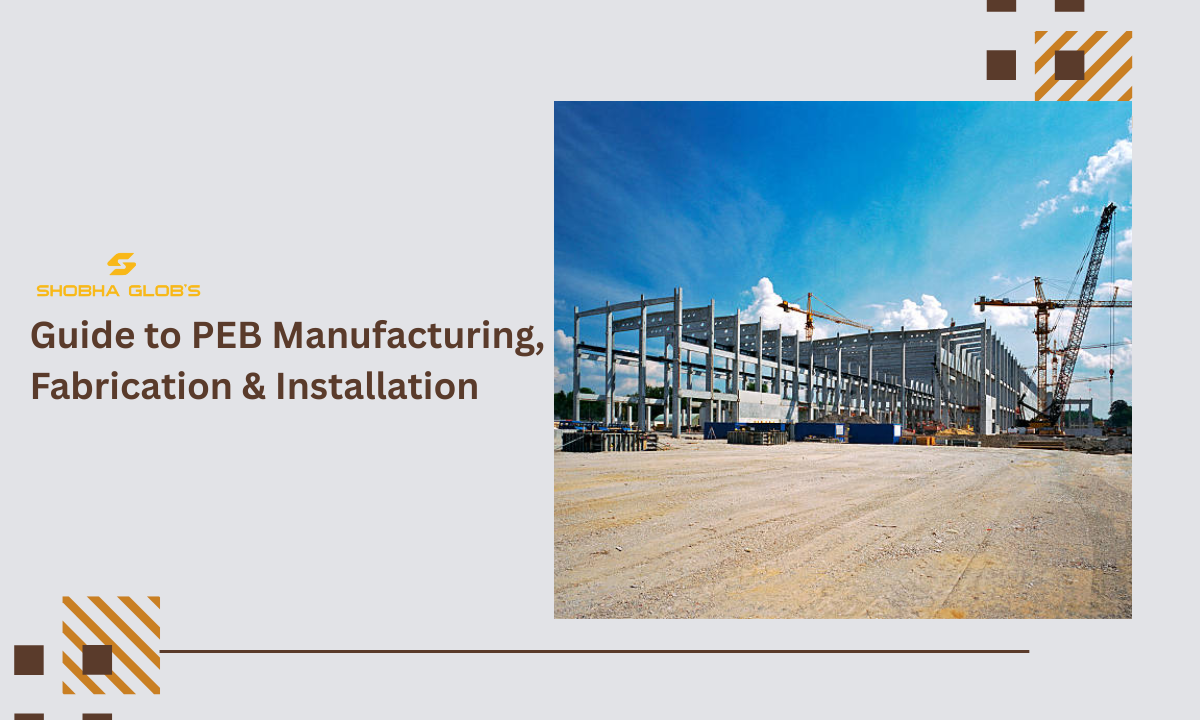
Pre-Engineered Buildings (PEB) have revolutionized commercial and industrial construction in India, offering a faster, more cost-effective, and highly reliable alternative to traditional structures. But what exactly makes these structures so efficient? The secret lies in a highly optimized, end-to-end workflow, beginning with precise design and culminating in swift installation.
To help you understand the power of this technology, we’re taking a deep dive into the complete journey from a raw steel coil to a finished industrial facility.
Phase 1: The Pre-Engineered Building Manufacturing Process
The entire efficiency of a PEB system hinges on meticulous planning and high-tech PEB manufacturing. This initial stage covers everything from conceptual design to generating precise shop drawings, setting the foundation for the entire project.
Step 1: Design and Engineering

The pre-engineered building manufacturing process begins with advanced engineering. Using sophisticated software, engineers design the primary framing (columns and rafters), secondary members (purlins and girts), and cladding systems.
This software not only optimizes the steel usage to reduce material waste but also calculates every load the structure will face, wind, seismic, and live loads, ensuring absolute safety and compliance with all Indian standards.
Step 2: Material Preparation
Once the design is finalized, the bill of materials is generated. High-strength steel plates and coils are sourced. The PEB manufacturing process requires extreme precision; the raw materials are prepared for the next critical phase: cutting and drilling.
Phase 2: PEB Fabrication: The Heart of the Process
This is where the structure comes to life. The terms PEB fabrication, PEB structure fabrication, and PEB structures fabrication all refer to the critical process of transforming raw steel into the structural components of the building. This phase is characterized by automation and stringent quality control.
High-Precision Fabrication
The key to PEB structure fabrication is automated and accurate cutting and welding.
1. Cutting: Computer Numerical Control (CNC) cutting machines are used to cut the steel plates into precise web and flange plates for the primary members.
Unlike traditional steel, PEBs utilize tapered members, meaning the depth of the structural element varies along its length. This is an engineering feat designed to place steel only where it is needed for strength, optimizing material use.
2. Assembly & Welding: The cut webs and flanges are then assembled and welded together.
Automated submerged arc welding (SAW) machines are used to create continuous, high-quality, and structurally sound welds. This ensures consistency and reliability across every component of the structure.
3. Hole Punching: Connection holes are accurately drilled or punched. Because the building is “pre-engineered,” every component must fit together perfectly on-site without any cutting or welding adjustments.
This precision is what makes the subsequent peb installation so fast.
Quality Control and Finishing
After the PEB fabrication is complete, every component is checked against the shop drawings for dimensional accuracy. Finally, the structural members receive a protective coating. This typically involves sandblasting and applying specialized primers and paints to protect the steel from corrosion, which is vital for the structure’s long-term durability.
Phase 3: The PEB Construction Process and Installation
With the components fabricated, painted, and ready, they are systematically packed and shipped to the construction site. This phase demonstrates the true speed and efficiency of the PEB system.
Step 1: Foundation and Anchor Bolts
While the peb manufacturing is underway in the factory, the site preparation and foundation work, including the installation of anchor bolts, occur simultaneously at the construction site. This parallel process drastically cuts down the overall project timeline.
Step 2: Erection and PEB Installation
This is the fastest part of the journey. The PEB construction process is essentially a giant assembly job.
- Primary Framing Erection: Using cranes, the pre-fabricated columns and rafters are bolted together. Because every piece is perfectly manufactured to fit, the erection crew can move quickly.
- Secondary Members: Purlins (for the roof) and girts (for the walls) are bolted onto the primary frame. These members provide support for the cladding and brace the structure.
- Cladding and Finishing: The pre-cut roofing sheets, wall panels, flashing, and trim are installed. All necessary doors, windows, and ventilation components are integrated according to the design.
The efficiency of PEB installation minimizes site labor costs, reduces construction waste, and ensures that projects whether they are warehouses, factory buildings, or commercial complexes, are completed weeks or even months ahead of schedule common in traditional construction.
Conclusion: The Path to Topical Authority in Construction
The streamlined PEB construction process, supported by cutting-edge PEB manufacturing and precise PEB fabrication, is the reason Pre-Engineered Buildings are the modern construction solution. From the initial engineering to the final coat of paint, quality and speed are non-negotiable standards.
For a structure built to exacting standards, delivered quickly and designed to last, trusting experts in the complete lifecycle of PEBs is essential.
Looking to partner with top-tier pre-engineered building manufacturers in India?
Learn more about how superior process control translates into superior structures on our money page: https://shobhaglobs.com/pre-engineered-building-manufacturers-in-india/