
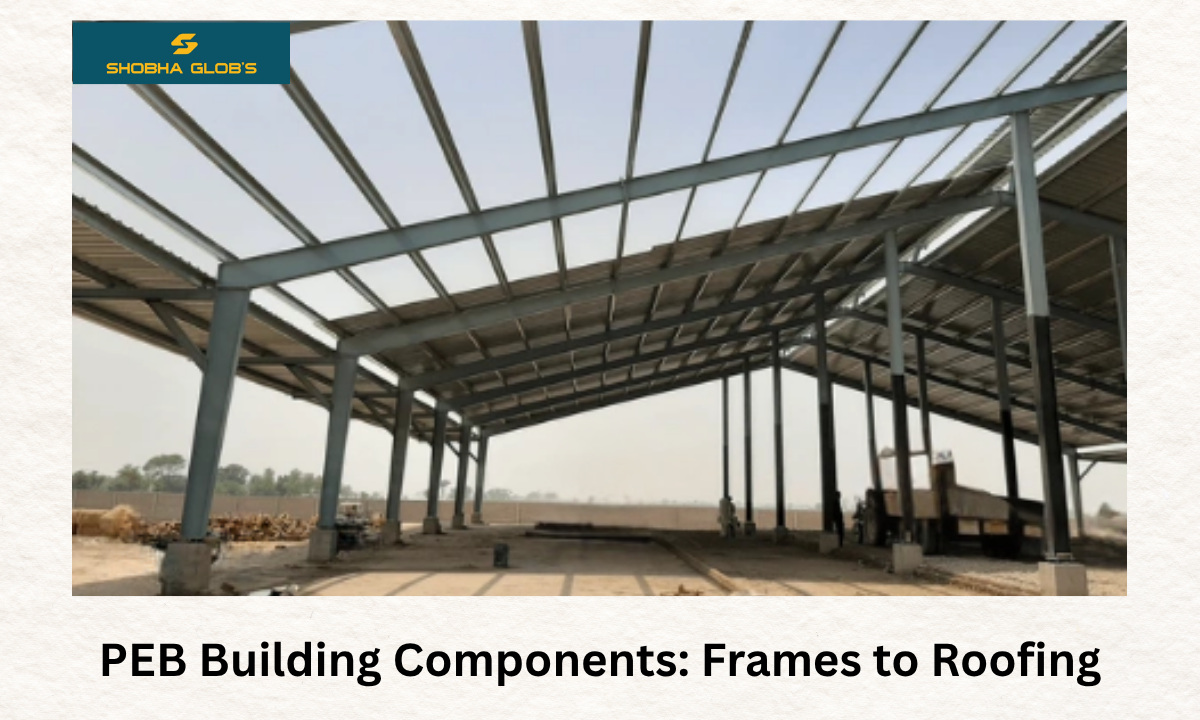
Pre-engineered building technology has revolutionized the construction industry with its speed, efficiency, and cost-effectiveness. These innovative structures are changing how we approach commercial, industrial, and even residential construction projects.
We have seen a dramatic increase in demand for pre-engineered building structures across India. From warehouses to showrooms, PEB construction offers unmatched advantages over traditional building methods.
Understanding the key components that make up these structures is essential for anyone considering this construction approach. Partnering with experienced pre-engineered building manufacturers in Bangalore ensures quality and timely delivery of your project. But what exactly makes these buildings so special, from foundation to roofing? Read on.
Primary Steel Frames: The Backbone
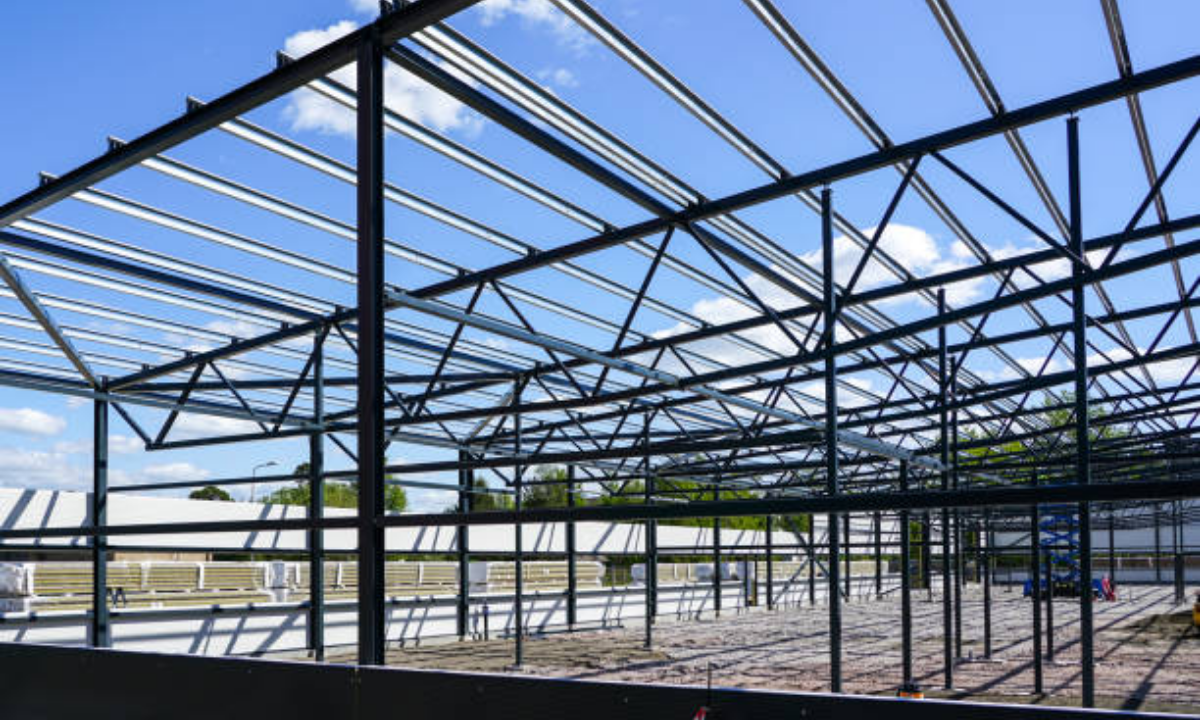
The primary frames form the skeleton of any PEB building. These are the main load-bearing structures that give the building its shape and strength.
We use welded built-up sections rather than conventional hot-rolled sections. This allows for optimization of material usage while maintaining structural integrity.
Primary frames consist of columns and rafters. The columns transfer vertical loads to the foundation, while rafters support the roof and transfer loads to the columns.
These frames are designed to withstand specific loads, including dead load, live load, wind load, and seismic forces. Computer-aided design ensures optimal material distribution for maximum strength with minimum weight.
Secondary Structural Members
Secondary members connect the primary frames and provide support for wall and roof panels. These include purlins, girts, and eave struts.
Purlins run horizontally across the rafters and support the roof sheeting. They are typically cold-formed C or Z sections designed to carry roof loads.
Girts serve the same purpose for wall panels. They run horizontally between columns and provide attachment points for wall cladding.
We have found that proper spacing of secondary members is crucial for panel performance. It affects the building’s ability to resist wind pressure and maintain structural stability.
Roof and Wall Panels: The Building Envelope
The building envelope protects the interior from weather elements. This includes roof and wall panels that provide insulation and weatherproofing.
Most PEB structure fabrication uses pre-coated galvanized steel sheets. These come in various profiles, colors, and thicknesses to suit different requirements.
We recommend insulated sandwich panels for temperature-sensitive applications. These consist of two metal sheets with an insulation core material in between.
Single-skin panels with separate insulation are more economical for less demanding environments. The choice depends on your climate control requirements and budget.
Roofing Systems and Accessories
The roofing system does more than just keep rain out. It’s a comprehensive assembly that ensures long-term weather protection.
Ridge caps cover the roof peak where two slopes meet. Gutters and downspouts manage rainwater drainage, preventing water accumulation.
We always include roof ventilators in our designs. These promote air circulation, reduce heat buildup, and prevent condensation issues.
Skylights or translucent sheets can be integrated to provide natural lighting. This reduces energy costs and creates a better working environment.
Flashing details at wall-roof junctions and around penetrations prevent water seepage at vulnerable points.
Bolts, Fasteners, and Connections
Connections are where engineering meets precision. Every joint must transfer loads safely and efficiently.
High-strength bolts connect primary frame members. Self-drilling screws fix panels to secondary members with neoprene washers that seal against water entry.
Anchor bolts connect the steel structure to the concrete foundation. Proper anchoring is essential for the building’s stability, especially in high-wind or seismic zones.
We cannot overemphasize the importance of quality fasteners. They’re small components that play an outsized role in structural integrity.
Foundation and Base Plates
While technically not part of the PEB structure, the foundation is critical for performance. It transfers building loads to the ground safely.
Isolated footings are typically used for column bases. These are designed based on soil bearing capacity and column loads.
Base plates distribute column loads over the foundation area. They’re welded to columns and anchored to foundations with anchor bolts.
We always ensure proper foundation design coordination. Leveling and alignment during foundation work are crucial for proper assembly.
Integrated Building Services
Modern PEB residential buildings and commercial structures integrate various services seamlessly. This includes electrical conduits, HVAC systems, and even solar installations.
Cable trays can be suspended from the structure to route electrical and data cables throughout the building.
Crane beams can be integrated into the primary frame design for industrial applications. This eliminates the need for separate support structures.
Component Comparison Table
| Component | Material | Primary Function | Typical Section |
|---|---|---|---|
| Primary Frames | Welded built-up I-sections | Main load-bearing | Variable depth |
| Purlins | Cold-formed steel | Roof panel support | C or Z sections |
| Girts | Cold-formed steel | Wall panel support | C or Z sections |
| Roof Panels | Pre-coated steel/Sandwich | Weather protection | 0.5 mm – 0.7mm |
| Wall Panels | Pre-coated steel/Sandwich | Enclosure | 0.4mm – 0.6mm |
Quality in Manufacturing
The advantages of PEB construction largely depend on manufacturing quality. Factory-controlled production ensures consistency that eliminates variations common in site fabrication.
We insist on proper quality checks at every stage. This includes material testing, dimensional verification, and surface treatment inspection.
Anti-corrosive treatment is essential for longevity. Components receive shot blasting and painting or galvanizing before dispatch.
Documentation and component marking facilitate easy site assembly. Each piece is labeled with its location and connection details.
Working with the Right Manufacturer
Choosing the right partner for your project makes all the difference. Experience, quality standards, and engineering capability matter significantly.
When looking for pre-engineered building manufacturers in Bangalore, verify their design capabilities. They should provide comprehensive engineering support and complete project documentation.
Check their manufacturing facility and quality control processes. Modern equipment and systematic quality checks indicate reliable production standards.
We recommend reviewing completed projects similar to yours. This gives confidence in their ability to deliver what you need on time and within budget.
Final Thoughts
Every component of a PEB building plays a vital role in the structure’s performance and longevity. From the primary frames that bear the loads to the smallest fastener, each element matters.
We have seen how understanding these components helps in making informed decisions. It enables better communication with manufacturers and ensures you get exactly what your project needs.
The growing integration of modern technologies showcases the versatility of PEB construction. Reputed pre-engineered building manufacturers in Bangalore, like Shobha Globs, have perfected this construction method, recognizing its efficiency and adaptability for diverse applications.
As you plan your next construction project, consider how each PEB component contributes to creating a durable, efficient, and cost-effective building solution.
Frequently Asked Questions
Q: What is a PEB building?
A: A PEB (Pre-Engineered Building) is a steel structure designed and fabricated in a factory, then transported and assembled at the construction site. Components are engineered to exact specifications using advanced software, ensuring optimal material use and structural efficiency. This method reduces construction time and provides superior quality control compared to conventional building methods.
Q: How many types of PEB buildings are there?
A: PEB buildings are categorized by usage: industrial (warehouses, factories, manufacturing units), commercial (showrooms, retail spaces, office buildings), residential (homes, apartments, villas), institutional (schools, hospitals, community centres), and agricultural (storage facilities, barns, livestock shelters). They can also be classified by roof type (gable, multi-gable, lean-to, curved) and frame configuration (clear span, multi-span, modular expansion).
Q: What is the difference between PEB and RCC buildings?
A: PEB buildings use prefabricated steel components assembled on-site with a construction time of 3-4 months, while RCC buildings use reinforced concrete cast on-site, taking 8-12 months. PEBs are 30-40% more cost-effective, require minimal maintenance, and offer greater flexibility for future modifications or expansions. RCC buildings provide better fire resistance and sound insulation but require significantly more time, labor, and ongoing maintenance throughout their lifecycle.
Q: What should I look for in pre-engineered building manufacturers in Bangalore?
A: Look for manufacturers with a proven track record, in-house design capabilities, modern manufacturing facilities, and quality certifications like ISO 9001. Verify their experience with projects similar to yours, check client testimonials, and ensure they provide comprehensive services, including design, fabrication, supply, and installation. Strong after-sales support, warranty coverage, and timely project delivery are essential factors in choosing the right manufacturer for your PEB project.