
Introduction
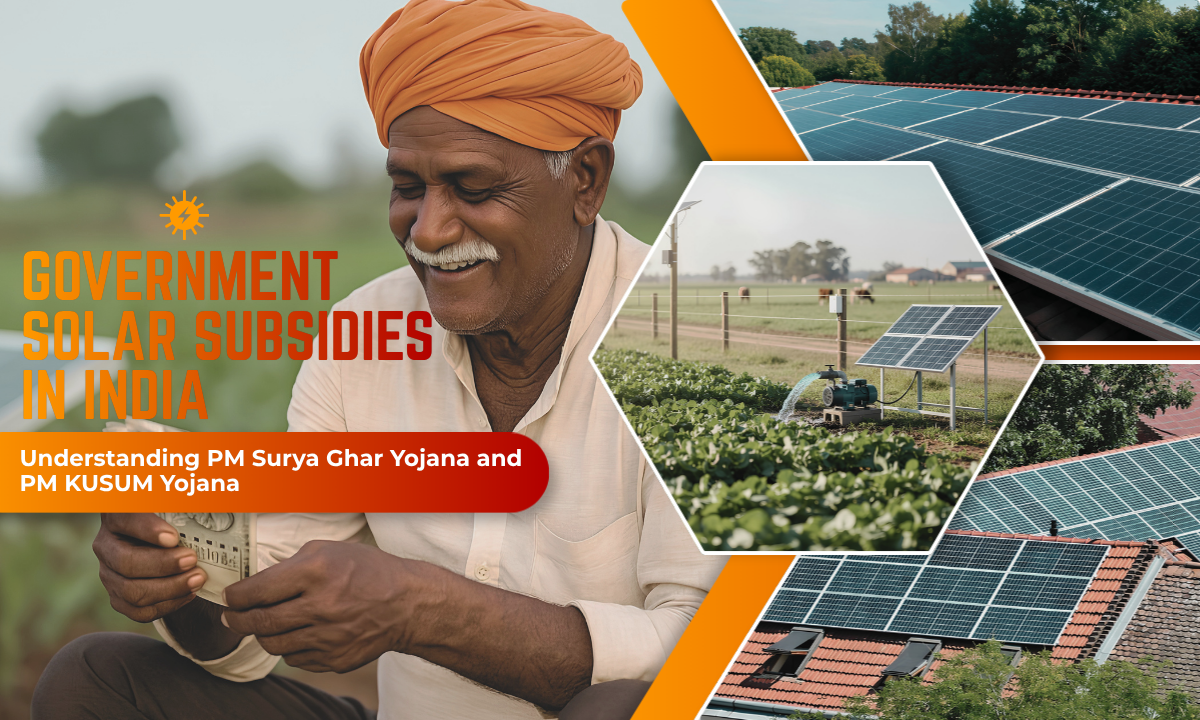
India’s transition toward clean energy is being accelerated by strong government support, especially through subsidy-driven schemes that make solar power more accessible and affordable. Among the most impactful initiatives are the PM Surya Ghar Yojana for households and the PM KUSUM Yojana for the agricultural sector. While both aim to expand solar adoption, they serve different audiences and offer unique benefits tailored to their needs.
PM Surya Ghar Yojana
With rising electricity costs and growing awareness about sustainability, this scheme provides direct financial support to reduce the upfront cost of installation. Homeowners can install rooftop solar panels and generate their own electricity, significantly lowering their monthly bills. The scheme also promotes net metering, allowing users to export excess power to the grid and earn credits. By making solar more affordable and accessible, PM Surya Ghar is helping households move toward energy independence while contributing to a cleaner environment.
Here are the key subsidy amounts under the PM Surya Ghar Yojana:
- ₹30,000/- 60,000/- subsidyfor a 1 kW-2kW rooftop solar system
• ₹60,000/- to 78,000/- subsidy for a 2 kW-3kW system
• Up to ₹78,000 subsidy for 3 kW and above systems (capped limit)
That means you get significant upfront cost reduction, making solar much more affordable for households.
PM KUSUM Yojana
PM KUSUM Yojana is designed to support farmers and the agricultural sector. It encourages the use of solar-powered irrigation pumps, replacing diesel-based systems, and reducing dependence on erratic grid supply. This not only cuts fuel costs but also ensures a more reliable power source for farming operations. Additionally, farmers can install small solar power plants on their land and sell surplus electricity to the grid, creating an extra source of income. This dual benefit—cost savings and income generation—makes PM KUSUM a transformative scheme for rural development.
This scheme provides subsidies for solar pump installation and solar panel systems.
It enables farmers to install solar-powered irrigation pumps, reducing their dependence on diesel and unreliable grid electricity. This not only lowers operating costs but also ensures a more consistent and eco-friendlier power supply for farming activities.
- Installation of small solar plants
- Installation of Solar powered agricultural pumps
- Solarization of existing grid connected agricultural pumps
It goes a step further by allowing farmers to set up small solar plants on their land. The electricity generated can be used for their own needs, and any surplus can be sold back to the grid—creating an additional and stable source of income.
DCR Panels mandatory
These Government schemes are only valid on DCR Panels installation.
DCR Panels refer to Domestic Content Requirement Panels; these panels are made in India and hence government is promoting its installation and offering subsidies to encourage homegrown brands.
Conclusion
Both schemes play a crucial role in addressing key challenges in India’s energy landscape. PM Surya Ghar targets urban and residential energy consumption, while PM KUSUM strengthens rural infrastructure and agricultural productivity. Together, they promote decentralized energy generation, reduce carbon emissions, and support India’s long-term sustainability goals.
Another important advantage of these schemes is their contribution to financial stability for users. By reducing dependence on conventional energy sources, individuals and farmers can protect themselves from fluctuating energy prices. Over time, the savings generated from solar installations often outweigh the initial investment, especially when supported by government subsidies.
In conclusion, PM Surya Ghar Yojana and PM KUSUM Yojana are not just subsidy programs—they are strategic initiatives that are reshaping how energy is produced and consumed in India. By making solar power more affordable for homes and farms, these schemes are paving the way for a more sustainable, self-reliant, and energy-secure future.
FAQs
5.1. What is the main objective of PM Surya Ghar Yojana?
The primary goal is to promote rooftop solar adoption among residential users by providing financial assistance and reducing installation costs.
5.2. Who can benefit from PM KUSUM Yojana?
Farmers, rural landowners, and agricultural users can benefit by installing solar pumps or setting up small solar power plants.
5.3. How much subsidy is available under PM Surya Ghar Yojana?
The scheme offers subsidies based on system size, a little lesser for 1kW to 2 kW systems, and typically provides higher support for systems up to 3 kW, with a capped maximum benefit of up to 78,000/- INR.
5.4. Can farmers earn income through PM KUSUM Yojana?
Yes, farmers can sell surplus electricity generated from their solar plants to the grid, creating an additional revenue stream.
5.5. Do both schemes support environmental sustainability?
Yes, absolutely. Both initiatives promote clean energy, reduce carbon emissions, and help decrease reliance on fossil fuels.
5.6. Is net metering available under PM Surya Ghar Yojana?
Yes, net metering is encouraged, allowing users to export excess electricity and receive credits on their bills.
5.7. What are the long-term benefits of these solar subsidy schemes?
Long-term benefits include reduced energy costs, energy independence, increased income opportunities (for farmers), and a lower negative environmental impact.
5.8. How do these schemes contribute to India’s energy future?
They support decentralized energy generation, improve energy access in rural and urban areas, and accelerate the country’s shift toward renewable energy.